DSF member of the month - Rob Hudson
For April 2026, we welcome Rob Hudson as our DSF member of the month! ⭐
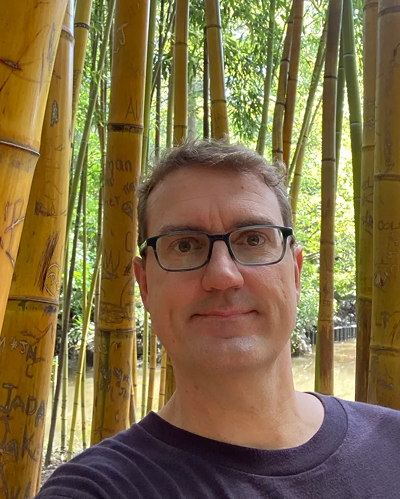
Rob is the creator of django-debug-toolbar (DDT), a tool used by more than 100 000 folks in the world. He introduces Content-Security-Policy (CSP) support in Django and contribute to many open source packages. He has been a DSF member since February 2024.
You can learn more about Rob by visiting Rob's website and his GitHub Profile.
Let’s spend some time getting to know Rob better!
Can you tell us a little about yourself
I'm a backend Python engineer based in Oregon, USA. I studied biochemistry in college, where software was just a curiosity and hobby on the side, but I'm grateful that my curiosity turned into a career in tech. My earliest memory of that curiosity was taking apart my Speak & Spell as a kid to see how it worked and never quite getting it back together again.
How did you start using Django?
I followed the path of the "P"s: Perl, then PHP, then Python. When Ruby on Rails arrived it was getting a lot of attention, but I was already enjoying Python, so when Django was announced I was immediately drawn to it. I started building small apps on my own, then eventually led a broader tech stack modernization at work, a health education company where we were building database-driven learning experiences with quizzes and a choose-your-own-adventure flow through health content. Django, Git, and GitHub all came together around that same time as part of that transition. Fun fact: my GitHub user ID is 1106.
What other framework do you know and if there is anything you would like to have in Django if you had magical powers?
I've been building a few projects with FastAPI lately and have really come to appreciate the type-based approach to validation via Pydantic. The way typing syntax influences the validation logic is something I'd love to see influence Django more over time.
Erlang has a feature called the crash dump: when something goes wrong, the runtime writes out the full state of every process to a file you can open and inspect after the fact. As someone who built a debug toolbar because I wanted to see what was going on under the hood. Being provided a freeze frame of the exact moment things went wrong, full state intact, ready to inspect sounds like magic.
The Rust-based tooling emerging in the Python ecosystem is fascinating to watch. Tools like uv, ruff, and efforts around template engines, JSON encoders, ASGI servers, etc. The potential for significant speed improvements without losing what makes Django Django is an interesting space.
What projects are you working on now?
I have a couple of personal fintech projects I'm playing with, one using FastAPI and one using Django. I've been enjoying exploring and wiring up django-bolt for the Django project. I'm impressed with the speed and developer friendliness.
On the django-debug-toolbar front, I recently contributed a cache storage backend and have a longer term idea to add an API layer and a TUI interface that I'd love to get back to working on someday.
Which Django libraries are your favorite (core or 3rd party)?
Django Debug Toolbar (I may be slightly biased). Beyond that: whitenoise and dj-database-url are great examples of libraries that do one thing well and get out of your way. I'd also add granian, a Rust-based ASGI server. And django-allauth, which I'm somehow only just trying for the first time. For settings management I've cycled through a few libraries over the years and am currently eyeing pydantic-settings for a 12-factor approach to configuration.
What are the top three things in Django that you like?
The community. I've been part of it for a long time and it has a quality that's hard to put into words. It feels close knit, genuinely welcoming to newcomers, and there's a rising tide lifts all boats mentality that I don't think you find everywhere. People care about helping each other succeed. The sprints and hallway track at DjangoCon have been a wonderful extension of that.
The ORM. Coming from writing a lot of raw SQL, I appreciate the syntax of Django's ORM which hits a sweet spot of simplicity and power for most use cases.
Stability, documentation, and the batteries included philosophy. I appreciate a framework that at its core doesn't chase trends, has a predictable release cycle, amazingly well written docs (which makes sense coming from its journalism background), and there's enough built in to get surprisingly far without reaching for third party packages.
You are the creator of Django Debug Toolbar, this tool is really popular! What made you create the tool and publish the package?
The inspiration came from Symfony, a PHP framework that had a debug toolbar built in. At the time, I was evaluating frameworks for a tech stack transition at work and thought, why doesn't Django have one of these? So I started hacking on a simple middleware that collected basic stats and SQL queries and injected the toolbar HTML into the rendered page. The first commit was August 2008.
The SQL piece was personally important. Coming from PHP where I wrote a lot of raw SQL by hand, I wanted to see what the ORM was actually generating.
The nudge to actually release it came at the first DjangoCon in 2008 at Google's headquarters. Cal Henderson gave a keynote called "Why I Hate Django" and showed a screenshot of Pownce's debug toolbar in the page header, then talked about internal tooling at Flickr similar to what the Django debug toolbar has currently. Seeing those motivated me to tweet out what I was working on that same day. Apparently I wasn't the only one who wanted to see what the ORM was doing.
It has been created in 2008, what are your reflections on it after so many years?
Mostly gratitude. I had a young family at the time and life got busy, so I stepped back from active maintenance earlier than I would have liked. Watching it flourish under the maintainers who stepped up has been really wonderful to see. They've improved it, kept up with releases, supported the community, and have done a better job of it than I was in a position to do at the time, so I'm grateful to all who carried the torch.
At this point I contribute to it like any other project, which might sound strange for something I created, but it's grown bigger than my early involvement and that feels right. I still follow along and it makes me happy to see it continuing to grow and evolve.
What I didn't anticipate was what it gave back. It helped launch my career as a Django backend developer and I'm fairly certain it played a role in landing me a job at Mozilla. All from of a middleware I hacked together just to see what the ORM was doing.
Being a maintainer is not always easy despite the fact it can be really amazing. Do you have any advice for current and future maintainers in open source?
For what it's worth, what worked for me was building things for fun and to learn rather than setting out to build something popular. I also didn't worry too much about perfection or polish early on.
If life gets busy or your interests move on, I'd say trust the community. Have fun, and if it stops being fun, find some enthusiastic people who still think it's fun and hand it to them gracefully. That worked out better than I could have hoped in my case.
I'm genuinely curious about how AI changes open source. If simple utilities can be generated on the fly rather than installed as packages, what does that mean for small focused libraries? My hope is that the value of open source was never just the code anyway. The collaboration, the issue discussions, the relationships. AI can generate code but it can't replicate those things.
One thing I've noticed is newer developers using AI to generate patches they don't fully understand and submitting them as contributions. I get the impulse, but I'd encourage using AI as a tool for curiosity rather than a shortcut. Let it suggest a fix, then dig into why it works, ask it questions, iterate, which is something I often do myself.
You have introduced CSP support in Django core, congratulations and thank you for this addition! How did the process of creating this contribution go for you?
I picked up django-csp at Mozilla because it had become unmaintained and was a blocker from upgrading to newer Python and Django versions. What started as a simple maintenance task turned into a bit of a yak shave, but a good one. Getting up to speed on CSP led to ticket triage, which led to a refactor, which eventually led me to a 14 year old Django issue requesting CSP in core. Once the refactor was done I made the mistake of actually reading that 14 year old ticket and then felt personally responsible for it.
The more I worked in the space the clearer the ecosystem problem became. As a third party package, django-csp couldn't provide a standardized API that other packages could reliably depend on. If a third party library needed to add nonces to their own templates, they couldn't assume django-csp was installed. Seeing that friction play out in projects like debug toolbar and Wagtail convinced me that CSP support made sense in core.
Working with the Django fellows through the process was a genuine pleasure and I have enormous respect for what they do. They are patient, kind, and shaped what landed in core immensely. What surprised me most was how much they handle behind the scenes and how gracefully they manage the constant demands on their attention. Huge props to Natalia in particular for guiding a large and complex feature through to completion.
Do you remember your first contribution to open source?
Before Django I'd been tinkering on the web for years. I built tastybrew, an online homebrew recipe calculator and sharing site, partly to scratch my own itch and partly to get deeper with PHP and hosting my own projects. Back then open source collaboration wasn't what it is today. Before GitHub there was Freshmeat, SourceForge, emailed patches, maybe your own server with a tarball to download.
My first Django contribution was a small fix to the password reset view in 2006. Over the next several years there were around 40 or so contributions like docs corrections, admin improvements, email handling, security fixes. Contributing felt natural because the code was open and the community was welcoming.
I joined Mozilla in 2011 and shifted focus for a while. Mozilla was quietly contributing quite a bit back to the Django ecosystem during those years, with many 3rd party Django libraries, like django-csp. One of my favorite open source contributions was when I collaborated with a colleague on a Python DSL for Elasticsearch that eventually became the basis for Elastic's official Python client.
What are your hobbies or what do you do when you’re not working?
Reading, cooking, and getting outside when I can. I try to eat a whole food plant based diet and enjoy cooking in that style. Not sure it counts as a hobby but I enjoy wandering grocery stores, browsing what's new, reading ingredients, curious about flavors, thinking about what I could recreate at home.
Getting away from screens is important to me. Gardening, hiking, camping, long walks, travel when possible. Petrichor after rain. Puzzles while listening to audiobooks or podcasts. I brew oolong tea every day, a quiet ritual where the only notification is my tea timer.
Code has always felt more like curiosity than work to me, so I'm not sure where hobby ends and the rest begins.
Anything else you'd like to share?
If you have a Django codebase that needs some love, I'm available for contract work. I genuinely enjoy the unglamorous stuff: upgrading legacy codebases, adding CSP support, and refactoring for simplicity and long term maintainability. There's something satisfying about stepping back, seeing the bigger picture, and leaving things cleaner than you found them. You can find me on GitHub at robhudson.
Doing this interview was a nice way to reflect on my career. I can see that curiosity and adaptation have been pretty good companions. I'm grateful Django and its community have been a big part of that journey.
Thank you for doing the interview, Rob !