DSF member of the month - Katherine "Kati" Michel
For July 2026, we welcome Katherine "Kati" Michel as our DSF member of the month! ⭐
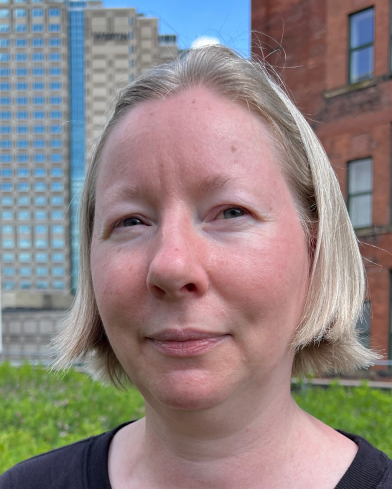
Kati is involved in the Django community for many years. She was a DEFNA Director for 8 years and DjangoCon US Website Chair and Co-Chair. She is a DSF member since December 2017!
You can learn more about Kati by visiting Kati's website and her GitHub Profile.
Let’s spend some time getting to know Kati better!
Can you tell us a little about yourself? (hobbies, education, etc)
In 2002, I was living in Lawrence, Kansas and working for government contracts supporting US Citizenship and Immigration Services and the US Department of Education. While working for USCIS, I spoke to tens of thousands of people from around the world, but hadn't seen much of the world myself. In 2009, I decided to move to England and earn a master's degree from Lancaster University Management School. During the program, I was fortunate to have an internship in the IT Change Management Department of Co-operative Financial Services/Britannia Building Society.
It feels full circle that I am now a software engineer at JPMorganChase, working in Infrastructure Platforms, Databases Department.
How did you start using Django?
While living in Lawrence, I visited the Lawrence Public Library often. I would sometimes drive past the nearby Lawrence Journal World and had no idea that Django was being invented there.
During my internship at CFS/Britannia Building Society in England, I was immersed in technology and loved it. Although it was a tumultuous time due to the subprime mortgage crisis, I was left with an insatiable curiosity about programming. That is how I learned about Django, and I have been using Django ever since.
What other framework do you know and if there is anything you would like to have in Django if you had magical powers?
In addition to Python/Django, I work with React.
At DjangoCon US 2025, Will Vincent commented during his talk "Django for AI" that Django "never really 'owned'" the niche of classic Machine Learning models, but should have, because it's great for small and medium ML models. He recently asked Django Project Forum if Django should have an official skills.md like FastAPI now has. These are important conversations to have.
If I had magical powers, I would maintain the stability and maturity many Django users celebrate while making targeted enhancements to help it better serve developers who are reaching for FastAPI or JavaScript frameworks first. Providing Django's benefits while meeting the use case is win-win.
Django already supports many modern patterns. Clear starter guides and code examples showing how to build a classic ML application, LLM chat bot, async workflows, React/Angular/Vue integration, and APIs, while taking advantage of the benefits Django offers, could help developers discover it better.
Marlene Mhangami and Benjamin "Zags" Zagorsky also gave some ideas for how to approach this in their respective DjangoCon US 2025 keynotes.
Author's note: You can watch Marlene Mhangami's keynote and Benjamin "Zags" Zagorsky's keynote here.
What projects are you working on now?
In my work, I am part of a team building a new on-premises caching service from the ground up. I design distributed system topology, write code for a React UI and Django control plane that orchestrate tasks to provision these distributed systems based on internal customer requirements, create Ansible playbooks to manage the servers, and do Red Hat Enterprise Linux admin. It's not a typical Django use case, but fun and fascinating in its own right.
Which Django libraries are your favorite (core or 3rd party)?
I had a website query that was becoming progressively slower as the data in the database grew. I installed django-silk, a live profiling and inspection library, diagnosed an N+1 problem, and had an aha moment as I watched the number of SQL queries in the django-silk dashboard greatly reduce with each new addition of a prefetch_related or select_related. It felt like magic. django-silk has been one of my favorite libraries ever since.
htmx and django-template-partials have been a joy to use together to create AJAX-like web UI functionality directly in HTML, without the need for JavaScript. As of Django 6.0, the Django Template Language now supports template partials. The htmx website has a fun UI Examples page to demo what it can do.
I am a fan of django-ninja. I like its use of Pydantic schemas, type hinting, and OpenAPI integration.
What are the top three things in Django that you like?
-
Django was invented at a newspaper. The Django ORM and admin are arguably its killer feature. Not every popular framework has a built-in ORM and admin that enable users to quickly structure and manage data.
-
Django's "batteries included" philosophy and rich library ecosystem enable developers to focus on building applications without re-inventing the wheel.
-
Django has strong security protections out of the box and a mature security policy.
I'm curious, how did you started to contribute to DjangoCon US? Do you have any advice for someone who might be considering joining the board of directors if the opportunity arose?
While looking through GitHub projects, I stumbled upon the DjangoCon US website code. I had a feeling that becoming part of a community like this would be life-changing, and it was. In March of 2016, I began helping with the DjangoCon US 2016 website. It was an invaluable opportunity to learn my way around Git, GitHub, and the website code. 2017 was a very eventful year. I became the DjangoCon US 2017 Website Chair, joined the DEFNA Board, and was hired by the web development agency contracted to create the DjangoCon US website.
I served as DjangoCon US Website Chair or Co-chair from 2017 to 2021 and DEFNA Board Member from 2017 to 2025, including several years as corporate secretary. Serving on the board gives you the opportunity to manage the higher level details of DjangoCon US, such as budgeting, location selection, contractor procurement, and volunteer oversight. You will also have the opportunity to grow Django outreach across North America, for instance, by awarding event grants. Being on the board was an honor and one of the most rewarding experiences of my life.
I've never seen a more practical write-up of how to excel in a board position than former DEFNA President Jeff Triplett's post "PSF Elections how I am voting.".
You have been a speaker, an organizer of DjangoCon US, and a member of DEFNA’s board of directors. Having observed the conference from many different perspectives over a period of time, how do you think DjangoCon US has evolved?
The conference structure has evolved to fit the times and talk subject trends have evolved (async, locality of behavior ecosystem, and AI come to mind), but my favorite evolution of all has been the major improvement in diversity and inclusion over time.
DjangoCon US increased the number of talks by women from around 6% in 2010 to nearly 50% in 2016. This was accomplished through intentional outreach. PyLadies and Django Girls have both played a major role.
In 2023, the conference was an important platform for the newly formed, self-organized Black Python Devs organization. By one organizer's count, we had around 10 Black speakers, and a Django Girls workshop had a majority of Black participants. In 2024, the conference hosted the Black Python Devs Leadership Summit.
From a Django Core perspective, at DjangoCon US 2018, former Django Fellow Carlton Gibson acknowledged that the community had become more diverse than ever, but the core contributors had continued to be white guys. The launch of Djangonaut Space in 2024 by a small group of community members has been a game changer. Djangonaut Space is a highly effective mentorship program that equips its cohort members to contribute to Django and its ecosystem, with a focus on inclusion.
You have been a speaker multiple times, do you have any advice for someone considering starting speaking one day?
My advice to aspiring public speakers is to start with the opportunities you can get and work your way up: give a presentation to your department (do a practice run to colleagues for feedback), give a talk to a local meetup, give a lightning talk at a conference, enlist the help of a talk mentor and submit to a conference CfP (especially those that welcome newcomers - DjangoCon US is one of them), and don't be discouraged by rejections.
As a conference attendee, I've seen some incredible speakers. Russell Keith-Magee immediately comes to mind. I appreciate the candor of highly effective public speakers who acknowledge that it is a skill that can be developed. I often remember an anecdote Nina Zakharenko once told. She got her start in public speaking when someone challenged her to do a lightning talk at a conference. She got the microphone caught in her hair during the talk. Years later, she expertly keynoted PyCon US. Don't wait for, or expect perfection.
After so many times in the Django community, what makes you stay?
I enjoy the Django tool ecosystem, and the people are wonderful. I have a lot of friends in this community who inspire me and are there for me.
How do you envision the future of Django from your perspective?
Last year was Django's 20th birthday. I’m optimistic that Django and its community will be thriving 20 years from now.
Do you remember your first contribution to Django and in open source?
At DjangoCon US 2019 sprints, I made my first contribution to Django Core with the help of Carlton Gibson. I added instructions for running tests using django-docker-box. I would love to contribute to Django again.
What are your hobbies or what do you do when you’re not working?
In my personal time, I love exploring new and interesting places, discovering great food, watching documentaries, and taking photographs.
Is there anything else you’d like to say?
Thank you for having me! I really enjoyed this interview.
Thank you for doing the interview, Kati !